Mahjong Solitaire - Master
- 4.6
- Rating
- 1.00M
- Installs
- Free
- Price
 Analysis by App-foxy
I picked up Mahjong Solitaire - Master expecting a familiar tile-matching pastime, and that is exactly where its appeal begins. It is a board puzzle game from Kiwi Fun, built around the simple act of removing matching Mahjong tiles until the layout is clear. The first move takes seconds to understand, but the decision behind that move can keep me thinking much longer. I choose a pair, watch the board open up, notice which tiles have become reachable, and then decide whether to continue immediately or pause to look for a safer sequence.
That straightforward rhythm is the reason I can recommend it to people who want a quiet game rather than a demanding competitive experience. It works well when I have a short break, but it also gives me a reason to start another board after finishing one. The game is free, rated for Everyone, and has attracted over one million installs. Its average rating is 4.6 from around 136 thousand ratings, which fits my impression: this is an accessible, familiar puzzle that does not ask me to learn a complicated rule set before I can enjoy it.
How the board turns one move into another
I look at each pair as more than a quick match: the useful question is what it will uncover and which choices it will leave available afterward. That small pause helps me avoid clearing tiles simply because they are easy to reach, and it makes the board feel like a sequence of decisions rather than a hunt for identical symbols. Next, I turn to the practical habits that make those decisions easier to manage.
You May Also Like

 Blood Strike: 2.5 Anniversary
Blood Strike’s Loadouts Turn Every Drop Into a Tactical Gamble
A close look at Blood Strike’s custom loadouts: how fast access to signature weapons reshapes its battle royale rhythm, rewards preparation, and narrows the gap between fights.

 Pandora - Music & Podcasts
Pandora’s Music Is Easy to Start, but Harder to Recover
Pandora’s strength is its low-effort path from a seed to a station. Its weak spot is how much confidence it asks you to place in connection, setup, and quiet recovery.

 8 Ball Pool
 Is Built on Rivalries, Rematches, and Routine
A close look at the rivalries, rematches, shared routines, and unanswered safety questions that turn a quick pool match into a persistent mobile community.

 Samsung Music
’s Quiet Strength Is Playing What You Already Own
Its reach comes less from spectacle than from dependable access to a personal library. That simplicity is both the app’s strongest retention engine and its ceiling.

 AccuWeather: Weather Radar
AccuWeather Review: A Quick, Clear Forecast for Everyday Decisions
For everyday plans, the best forecast is the one you can understand quickly. AccuWeather makes rain timing, radar, and local conditions easy to act on, with a few trade-offs.

 Hill Climb Racing
Why Hill Climb Racing Still Turns Crashes Into One More Run
A tiny car, a bumpy hill and one more upgrade: Hill Climb Racing keeps resurfacing because its simple chaos makes every near-miss feel personal.
More From Our News Desk



The first action is easy, but not meaningless
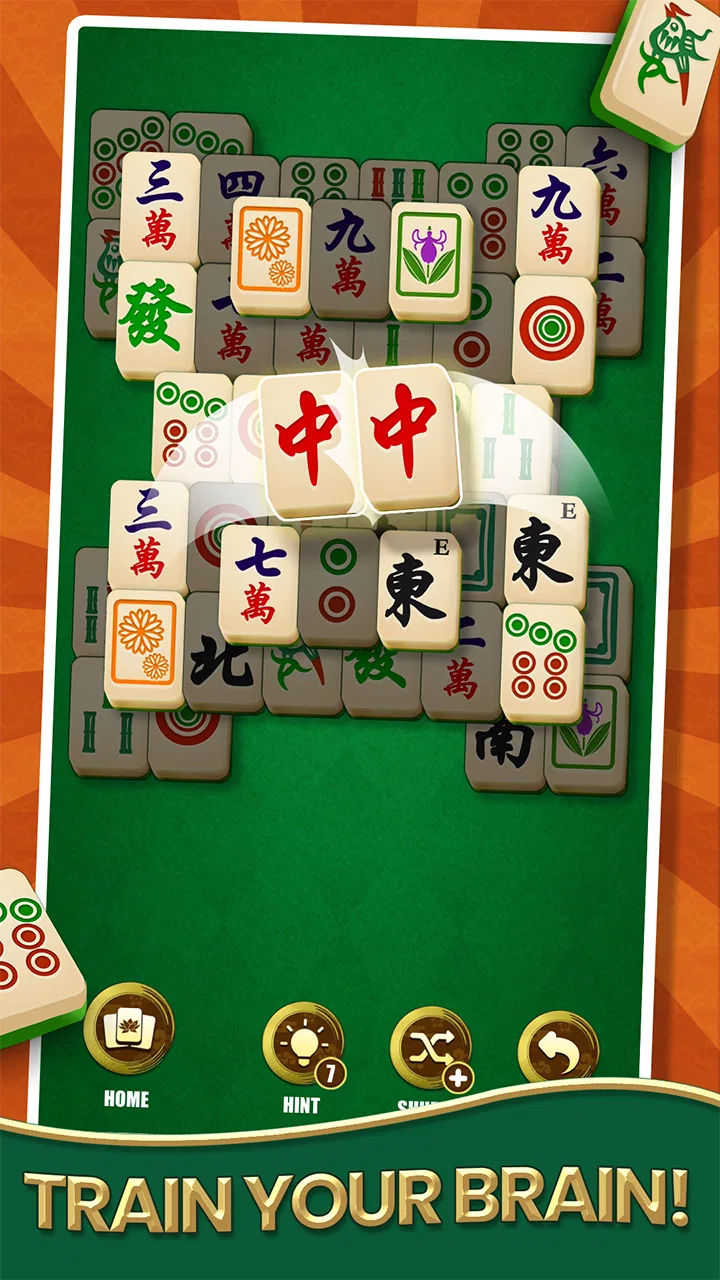
The opening move in Mahjong Solitaire - Master is deliberately approachable. I scan the visible tiles, identify two matching symbols that can be removed, and tap them. That immediate interaction is important because there is no long introduction standing between me and the puzzle. The game communicates its central idea through the board itself: find a legal pair, clear it, and inspect what the change reveals.
What makes the first action more interesting than a basic matching game is the need to think about access. A matching pair may be available now, while another pair could become available only after a particular tile is removed. If I choose carelessly, I may reduce my future options even though the move looked correct. I therefore try to avoid treating every visible match as equally valuable. A pair that opens a crowded area is often more useful than one that merely removes two tiles from an already open edge.
That is a practical habit for new players: before tapping, look at the tiles surrounding the pair and ask what the removal will expose. I also try to notice whether one symbol appears in several places. Clearing the most convenient pair is not always the best choice when another copy is blocking an important route through the layout. The game does not need complicated mechanics to create this kind of decision; the arrangement of the board does the work.
Feedback keeps the pace comfortable
Every successful match gives me a small piece of information. Two tiles disappear, the remaining shape becomes easier to read, and the next choice becomes more visible. That feedback rhythm is the heart of the experience. I act, receive a clear change on the board, reassess, and act again. Because each move produces a visible result, the game feels active even when I am playing slowly.
I like this pace more than the constant pressure found in many timed puzzle games. Mahjong Solitaire - Master lets me focus on pattern recognition and planning rather than rushing to beat a clock. That makes it suitable for a commute, a waiting room, or a few quiet minutes before bed. It also means the game can feel less exciting for someone who wants rapid reactions, dramatic effects, or a strong competitive ladder. Its satisfaction comes from gradually improving the position, not from spectacle.
The board also gives useful feedback when a move changes the available space. A previously buried-looking tile can become part of the next decision, and a layout that seemed blocked may suddenly open. I find it helpful to pause briefly after each pair instead of tapping as quickly as possible. That extra moment prevents me from following the first obvious match and encourages me to read the new board as a fresh problem.
One of my favorite ways to use the game is as a short mental reset after work. I can play one board while waiting for dinner or during a break from reading. The repeated cycle of searching, choosing, and clearing is structured enough to hold my attention without demanding the emotional energy of a competitive game. If I am tired, I can still understand what to do; if I am alert, I can spend more time planning the order of my moves.
Why the reward is more than clearing a pair
The obvious reward is seeing more of the board disappear. In practice, the better reward is the feeling that a difficult position has become manageable because of a decision I made several moves earlier. When a pair opens a useful section, I get a sense of progress that is more satisfying than simply matching identical pictures. The board becomes a record of my choices, and a successful finish feels like the result of reading that record correctly.
This is where the game differs from very casual match-three alternatives. A match-three game usually emphasizes quick combinations, chain reactions, and repeated visual stimulation. Here, I am more concerned with accessibility and order. The question is not only “what can I remove?” but also “what should I remove first?” That makes this a better choice for someone who enjoys traditional tile puzzles and a weaker choice for someone who wants constant cascades or a strong score-chasing loop.
I also appreciate that the reward arrives in small steps. I do not have to wait until the end of a long session to feel that I am progressing. A single well-chosen pair can improve the position, and several good decisions create a visible path toward completion. This makes the game easy to return to because the motivation is immediate: I want to see what the next cleared section will reveal.
For players who are new to Mahjong Solitaire, I suggest changing the goal from “finish as quickly as possible” to “preserve choices.” That small change improves the experience. I look for moves that keep multiple areas open, avoid spending a useful match too early, and revisit the whole layout after a major opening. This approach does not make every board effortless, but it turns random tapping into a repeatable method.
The reset is what makes another session tempting
When a board ends, the appeal of starting again comes from the clean slate. The previous arrangement no longer dictates my decisions, so I get a new visual problem without needing to learn a new game. That reset is gentle rather than dramatic. I finish, take in the result, and can return to the same basic rules with a different challenge in front of me.
This is a useful design choice for short sessions. I can stop after one completed layout without feeling that I have abandoned a long campaign, then come back later and understand the game immediately. It also makes the app suitable for sharing a device with a family member who wants a quick puzzle, since the rules are easy to explain and the Everyone age rating makes the tone broadly accessible.
At the same time, the reset exposes the game’s main limitation. Anyone looking for a deep story, a collection of characters, or a long-term strategic system may find the repetition too narrow. The pleasure depends on enjoying the board itself. If I do not feel like searching for pairs and managing access, there is no separate narrative or action layer to pull me forward. This is a focused solitaire puzzle, not an all-purpose entertainment package.
The free entry point helps with that decision. I can try the core experience without paying first, then decide whether it deserves a regular place on my phone. In-app purchases range from $0.99 to $19.99 per item, so I would treat optional spending carefully and only pay for something that genuinely improves my own routine. The important point for me is that the initial download does not require a purchase to understand whether this style of puzzle suits me.
Where it fits among familiar alternatives
Compared with a physical Mahjong solitaire set, this version is more convenient because I do not need table space or time to arrange tiles. I can open it for a brief session and leave just as quickly. The trade-off is that a physical set offers a more tactile experience and may feel more relaxing to someone who enjoys handling real pieces. I prefer the app when convenience matters, but I would not claim it replaces the atmosphere of a tabletop puzzle.
Compared with a traditional Sudoku app, the mental task feels more visual and spatial. Sudoku asks me to maintain numerical relationships across a grid, while this game asks me to recognize matching symbols and protect future access. I reach for Sudoku when I want a slower logic exercise with notation; I choose Mahjong Solitaire - Master when I want a puzzle I can understand at a glance and play with less setup.
Compared with match-three games, the pace here is calmer and the board state changes because of my sequencing rather than automatic chains. That makes it a better fit for focused, low-pressure play. On the other hand, match-three games usually provide more immediate spectacle and may be more appealing when I want fast feedback without much planning. Neither style is universally better; the choice depends on whether I want to optimize a position or chase a burst of activity.
I would also place it below a feature-heavy strategy board game for long-term depth. Those games can offer campaigns, resource systems, multiplayer competition, or elaborate progression. This title is more honest about its role: it gives me a repeatable solitaire board and asks me to solve it. That narrow focus is a strength when I want simplicity and a weakness when I need variety.
Small habits that improve the experience
My first useful habit is to scan the entire layout before making the opening move. I do not try to memorize every tile, but I note crowded zones, exposed pairs, and symbols that appear to be limiting access. This takes only a few seconds and often prevents the first available match from controlling the rest of the board.
My second habit is to reassess after every meaningful opening. If a move exposes several new tiles, I stop following my original plan and read the position again. A plan that made sense before the board changed may now be inferior. This is especially helpful when I am tempted to tap automatically through a series of obvious pairs.
My third habit is to use the game as a deliberate break rather than an endless distraction. I decide before starting whether I want one board or a longer session. Because the reset makes another round easy to begin, it is simple to continue longer than intended. Setting that boundary keeps the game useful as a short focus exercise instead of turning it into background scrolling.
A fourth insight is that the best move is not always the pair that creates the biggest immediate empty space. Sometimes preserving a flexible tile arrangement matters more than making the board look cleaner. I pay attention to which symbols may be useful later and avoid spending a convenient match when it is the only practical way to open a blocked area. This is the kind of small trade-off that gives the otherwise simple rules their depth.
Practical details before installing
Kiwi Fun has kept the game within a familiar board-puzzle format, which means I do not need prior Mahjong knowledge to begin. The short store description presents it simply as Mahjong Solitaire, and that simplicity is accurate: the main attraction is the tile-clearing board, not a complicated rules tutorial. I would recommend it to a first-time player who wants an approachable puzzle that can be learned through direct play.
On the technical side, the current version is 3.3.4 and it supports devices running Android 7.0 or later. That makes it a reasonable option for people using an older compatible Android phone, although I would still check the device requirement before installing. The game is free to download, with optional purchases listed per item, so anyone sensitive to spending should review the purchase prompts and decide in advance whether they plan to buy anything.
The age rating of Everyone also reflects the game’s broad, non-confrontational presentation. I would consider it suitable for a family tablet or for a relative who wants a simple pastime, while still explaining that the puzzle can become mentally demanding when the board offers several competing choices. Its accessibility is not limited to children; adults who enjoy classic solitaire-style play may find the same quiet concentration appealing.
Who should play it, and who should skip it
I think Mahjong Solitaire - Master is best for people who enjoy visual sorting, careful sequencing, and short repeatable sessions. It is especially suitable if you want a game that can be played without sound, without a competitive opponent, and without learning a large system of rules. I also see it working well for someone who wants a small routine during breaks: one board can provide a clear beginning, a series of decisions, and a definite stopping point.
I would be less likely to recommend it to someone who needs constant novelty. If you prefer multiplayer matches, narrative progression, rapid action, or a large variety of puzzle types, the focused solitaire format may feel repetitive. It is also not the right choice if your main goal is a hard logic challenge comparable to advanced Sudoku or a strategic board game. The challenge here comes from arranging and prioritizing matches within the tile layout, not from a broad ruleset.
For me, the strongest reason to keep it installed is the balance between low friction and meaningful choice. I can begin immediately, make one thoughtful move, see the board respond, and decide whether I want to continue. That loop is compact but not empty. The reward is a clearer position, the reset is a fresh layout, and the next session begins because I still want to test whether a better sequence will produce a smoother finish.
My verdict on the complete loop
After spending time with it, I see this game as a dependable board-puzzle companion rather than a title that tries to do everything. Its first action is clear, its feedback is easy to read, and its rewards arrive through visible progress instead of unnecessary complexity. The reset works because each new layout gives the familiar rules a slightly different problem to solve.
There are real limits: the core activity can become repetitive, players seeking action may find it too quiet, and optional purchases mean I would pay attention during the free-to-play experience. Still, those drawbacks do not undermine the central design. They simply define the audience. If you want a calm Mahjong solitaire game for focused breaks, I think Mahjong Solitaire - Master is worth trying. Its best quality is not that it overwhelms me with content, but that it makes one simple loop—choose, clear, reassess, and restart—feel satisfying enough to repeat.
My final recommendation is straightforward: install it if you enjoy visual board puzzles and want a free, accessible way to fill a few minutes with genuine decision-making. Skip it if you need story, competition, or constant mechanical variety. For the right player, Mahjong Solitaire - Master turns a familiar tile-matching idea into a pleasantly deliberate routine, and that is enough to bring me back for one more board.
FAQs for Mahjong Solitaire - Master
01What is Mahjong Solitaire - Master, and how is it played?
Mahjong Solitaire - Master is a tile-matching puzzle game based on the classic Mahjong Solitaire format. Your objective is to clear the board by selecting two identical, available tiles at a time. A tile can usually be chosen only when it is not covered and has at least one open side. The game focuses on observation, planning, and finding matching pairs before no useful moves remain.
02Does Mahjong Solitaire - Master work without an internet connection?
Mahjong Solitaire - Master is generally designed as a casual puzzle game that can be played offline, which makes it convenient for travel, commuting, or areas with limited connectivity. However, some features may still require internet access, including advertisements, cloud synchronization, updates, leaderboards, or optional online events. It is worth opening the game once while connected before relying on it completely offline.
03Is Mahjong Solitaire - Master free to download and play?
The game is typically available as a free download, allowing players to begin solving boards without paying upfront. Free versions may include advertisements, optional purchases, extra hints, additional themes, or other convenience features. Before downloading, check the store listing for the current pricing and in-app purchase details, since availability and monetization can vary between Android and iOS versions.
04Does the game include hints, undo options, or difficulty levels?
Mahjong Solitaire - Master commonly provides helpful tools intended to make challenging layouts more manageable, such as hints, shuffles, or undo actions. These features can be useful for beginners, although their availability or usage limits may depend on the specific version. Boards may also become progressively harder, so players who prefer a relaxed experience should review the game modes and difficulty options before starting.
05Is Mahjong Solitaire - Master suitable for children and older players?
Mahjong Solitaire - Master is easy to understand and does not require fast reflexes, making it suitable for many children, adults, and older players. The matching gameplay can encourage concentration and visual recognition, while the calm pace makes it accessible to casual gamers. Parents should still review the app’s age rating, advertising, privacy information, and any in-app purchase options before allowing children to play.
Pros
- Thousands of layouts provide plenty of replay value.
- Simple tap controls make tile matching easy to learn.
- Hints help when no obvious moves are available.
- Playable offline
- making it suitable for travel or commutes.
- Relaxing pace works well for short
- casual gaming sessions.
Cons
- Some advanced layouts may require considerable patience to complete.
- Tile designs can look similar on smaller phone screens.
- Progress may feel repetitive for players wanting more variety.
- Hints or reshuffles may be limited unless rewards are earned.
- Frequent reminders or ads can interrupt the flow between puzzles.

Mahjong Solitaire - Master
Gallery